
Dual R9700 vs. Ryzen AI Max+ 395: Local AI Server Buying Guide
Compare dual R9700 GPUs and a Ryzen AI Max+ 395 for shared local AI: model capacity, response speed, hardware costs, power use and upgrades.
By chris · Published · Updated · 11 min read
You want AI your team can use at work: answering questions, processing documents, helping with code, or powering an n8n workflow. You also want to know what the computer will cost, where it will sit, and whether it can keep up.
Two options we work with are a compact AMD Ryzen AI Max+ 395 system and a tower with two AMD Radeon AI PRO R9700 GPUs. Both can serve several requests through vLLM, the software we use to run language models for shared applications.
The 395 is appealing when space, power use and room for larger models matter most. The dual-GPU tower is the option we would explore first when fast responses and busy shared workloads are the priority, with more flexibility for separate services and future upgrades. We help you choose, build and deploy the system around the work you need it to do.
A small box or a full tower?
The size difference is easy to underestimate from a specification sheet. Framework’s 395 desktop is about 9 inches tall and under 4 inches wide. A conventional tower can be more than twice as tall and much deeper.
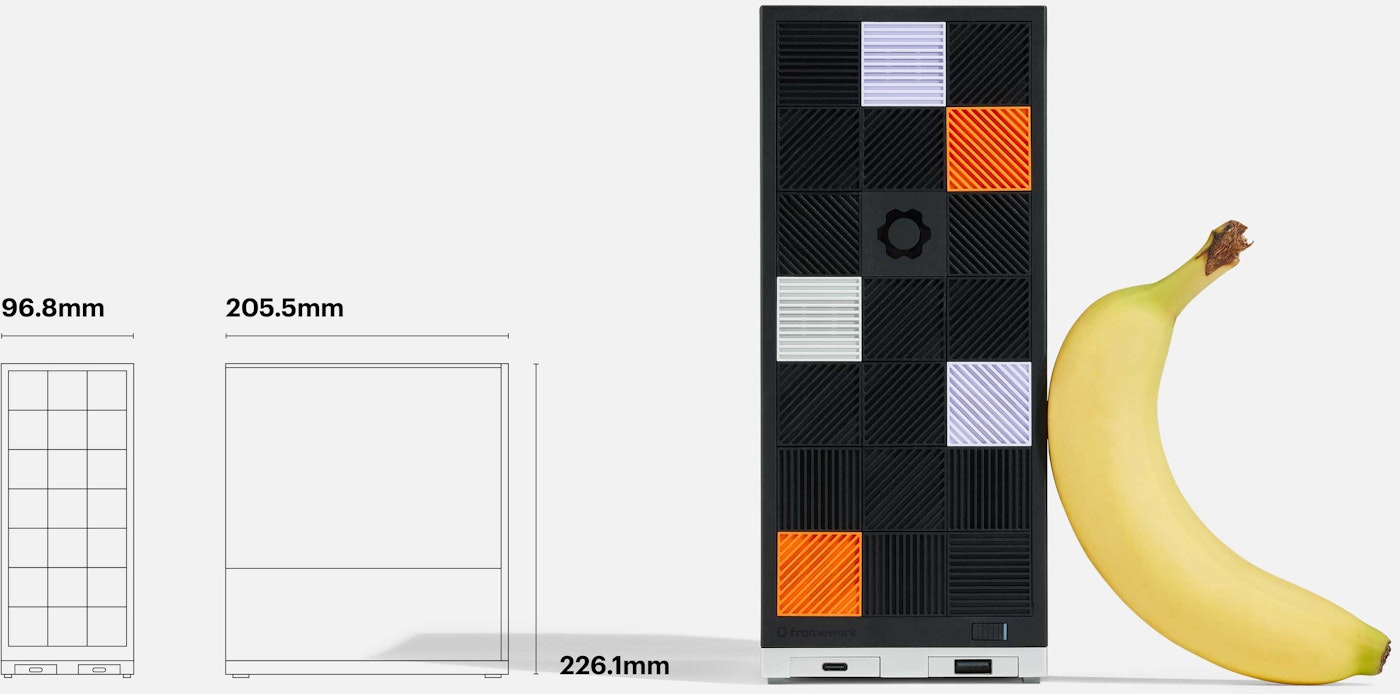
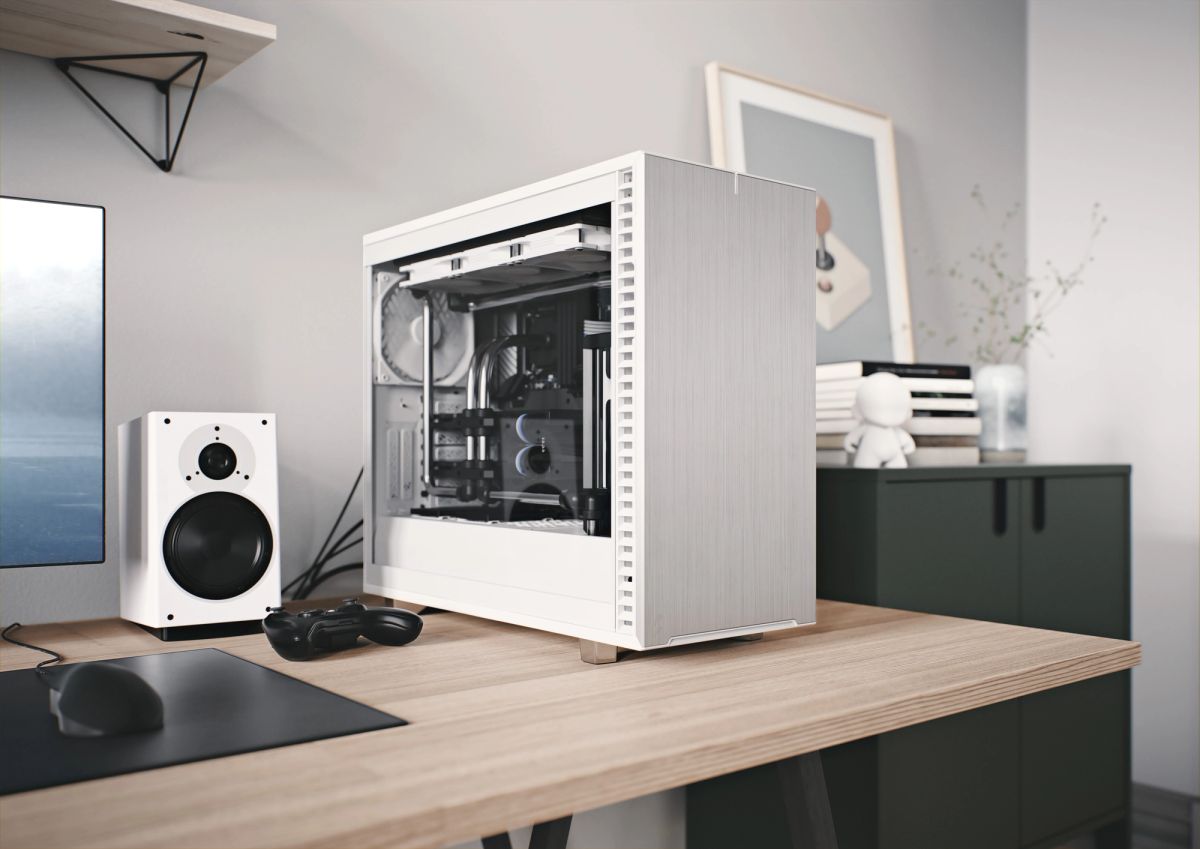
A compact system can live on a desk or shelf. A dual-GPU tower needs more room for airflow, and its heat and fan noise deserve consideration if people will work beside it. We choose the enclosure and cooling as part of the build.
Which one fits your business?
| What matters to you? | Ryzen AI Max+ 395, 128GB | Dual R9700 tower |
|---|---|---|
| Small footprint and lower power use | A strong reason to choose it | Needs more space and cooling |
| Fast interactive responses | Trades speed for compact size and memory capacity | Our starting point for a speed-focused build; validate the chosen model |
| Room for larger models | More shared memory available | 64GB across the two cards |
| Separate AI services | Workloads share the same resources | Can dedicate a card to each service |
| Future hardware upgrades | Storage is usually expandable; memory is fixed | More parts can be replaced or upgraded |
| Several people using AI at once | Yes, within the chosen model’s tested capacity | Yes, within the chosen model’s tested capacity |
Response speed deserves as much attention as model size. If your team is used to cloud coding assistants, waiting for a local answer to slowly appear can be frustrating. We would prioritize a tuned tower for that use case, then check response quality and speed with your actual tasks. Fast token generation alone does not make a local model equivalent to Claude or the models behind Codex.
How large a model can you run?
Think of memory as the room a model needs to work. Larger models usually need more of it, and each active conversation needs some room too. Model compression, called quantization, helps larger models fit, although it can affect answer quality.
With two R9700s: you have 32GB per card, or 64GB combined. Models in the 8B–32B range give you plenty of options. A compressed 70B model can also be a practical target, depending on the software and conversation length. The software has to split larger models across the cards; the memory does not combine automatically. AMD specifications; vLLM multi-GPU guidance.
With a 128GB 395: there is more room for larger compressed models. AMD documents up to 96GB available for graphics on Windows, with other allocations possible on Linux. That opens up many 70B and some 100B–120B-class options. The exact model and vLLM support still matter. AMD’s memory explanation.
Bigger does not always mean better for your business. A smaller model that handles your documents accurately and responds quickly may be the better purchase. We also leave memory available for simultaneous requests rather than filling the machine with the largest model that will load.
Will it keep up with the team?
Both systems can use vLLM to handle requests together, improving the amount of work completed across the whole team. The important number is how many requests overlap. Twenty employees asking occasional questions create a very different load from twenty automated agents working continuously.
Faster answers are a reason to buy the tower
Tokens are the pieces of text a model generates. More tokens per second generally means less waiting while an answer appears. In AMD’s preliminary Qwen3.8-27B test, a single R9700 reached 51.8 tokens/second versus 24.5 on the 395: about 2.1× faster generation. Both used Windows, llama.cpp and Vulkan, with different MTP settings. That supports the case for dedicated GPU speed, but it is not a dual-GPU vLLM result or a promise of the same advantage under load.
Published deployment examples
Published vLLM tests show what particular configurations can achieve with Qwen3.8-27B. The tower uses FP8 with DFlash2; the 395 uses BF16 with MTP. Different precision, acceleration, prompts and software builds prevent a fair hardware-only speed comparison. These are third-party results, not our own benchmarks.
Sources: dual-R9700 test and Ryzen 395 test.
View published results and test differences
| Client requests | Dual R9700, FP8 + DFlash2 | 395, BF16 + MTP |
|---|---|---|
| 1 | 98.5 | 6.58 |
| 2 | 165.0 | 12.23 |
| 4 | 278.2 | 18.87 |
| 8 | 390.4 | 32.86 |
| 16 | 418.5 | 48.70 |
Tower: bkvargyas, August 28, 2026. Two PCIe 5.0 x16 R9700s, tuned P2P, vLLM-radiance 1.0.11 (vLLM 0.28 / ROCm 7.14), tensor parallelism 2, FP8 weights/cache, DFlash2 k=7. BetterBench 0.2.3, 48 requests per level; thinking reported on. Server capped at eight active sequences.
Compact: nabe2030, 128GB GMKtec EVO-X2. vLLM commit c8602c790, BF16 with MTP, ROCm 7.2.2 runtime on Ubuntu 26.04 (not a validated OS/runtime pairing). ShareGPT-derived workload, 200 requests per condition; reasoning off. These are the vLLM results, not the repository’s problematic llama.cpp HIP results.
Neither study is a controlled cross-machine trial. We found no matched dual-R9700/395 Qwen3.8-27B vLLM test with identical precision, prompts, decoding settings and latency targets. Do not divide these results to predict your hardware speedup or divide total throughput by concurrency to claim measured per-user decode speed.
The practical takeaway: a well-tuned tower can deliver responsive shared serving, but configuration matters. In the tower study, median per-request generation stayed around 81 tokens/second at eight requests. Pushing sixteen clients into its eight-slot server increased the 99th-percentile wait for the first token to about 8.3 seconds. That is why we size a system around acceptable waiting time, not a headline user count.
Before recommending a system, we would test the chosen model with your kind of requests at increasing loads. That includes the wait before an answer starts, how quickly it finishes, and what happens during a busy period. n8n jobs can also use queues so a batch of background work does not overwhelm the service.
What about images and video?
A dual-GPU tower is worth considering if you want language, image and video workloads on the same machine. For example, one card could run a language model while the other handles image jobs, provided each workload fits. Software support determines whether a single job can use both cards.
The 395’s larger shared memory can help with bigger media models, but generation time still needs testing. For video, resolution and clip length make a substantial difference. We scope the actual workflow before recommending hardware.
What should you budget?
Price snapshot: September 6, 2026, U.S. dollars. Current 128GB 395 examples sit around $3,400–$3,650 for the computer. A dual-R9700 build needs a current, itemized quote. The reference card price below is about $1,900 each, but stock and host-memory costs make a single headline tower price misleading. Reusing components or choosing a different memory configuration can change the budget considerably.
These are hardware reference prices before tax, shipping, setup and support. We provide a project quote covering the configuration and deployment you actually need.
See price references and provisional component allowances
- GMKtec EVO-X2: 128GB/1TB listed at $3,499.99; 128GB/2TB at $3,649.99, marked available in the U.S. product variants. The lower default page price is for a 64GB model.
- Corsair AI Workstation 300: 395/128GB/4TB listed at $3,399.99, out of stock.
- B&H ASUS R9700 listing: $1,899.99 per card, temporarily out of stock.
Provisional worksheet, not a complete available build or an offer for sale. Several components below are allowances rather than priced, selected parts. Confirm the entire configuration before purchase.
| Component | Budget | Basis |
|---|---|---|
| Two R9700 cards | $3,799.98 | B&H listing above; unavailable at review |
| Ryzen desktop CPU | $400 | Planning allowance |
| Motherboard with appropriate dual-GPU lanes | $500 | Planning allowance |
| 128GB DDR5 host memory | $1,889.99 | Crucial Pro 2×64GB, Newegg marketplace seller Velztorm |
| 2TB NVMe SSD | $250 | Planning allowance |
| Suitable 1200W-class power supply | $250 | Planning allowance; verify connectors and load |
| Case and case fans | $250 | Planning allowance |
| CPU cooling | $100 | Planning allowance |
The GPU and Crucial 128GB RAM rows use observed listings; other rows are planning allowances. The RAM price is a Velztorm marketplace example, not a market average or a required spend. A September 6 recheck also found other 128GB desktop kits at substantially elevated prices; it did not establish a representative cheaper replacement. We will select memory against the motherboard compatibility list and your workload, then obtain current pricing. The tower needs verified slot spacing, PCIe connections, power and cooling. Out-of-stock prices are references only. The budget excludes assembly, deployment, backups, a UPS and ongoing support.
Power costs add up, especially around the clock
The compact system generally has the advantage on power and heat. For a simple example, assume the tower draws 650 watts and the 395 system draws 160 watts while working. At 18 cents per kWh, continuous operation would cost about $84 versus $21 a month.
Those are calculated examples, not measured power draw from these machines. For eight hours a day over 22 workdays, the active-use cost would be about $21 versus $5, plus any power used while idle.
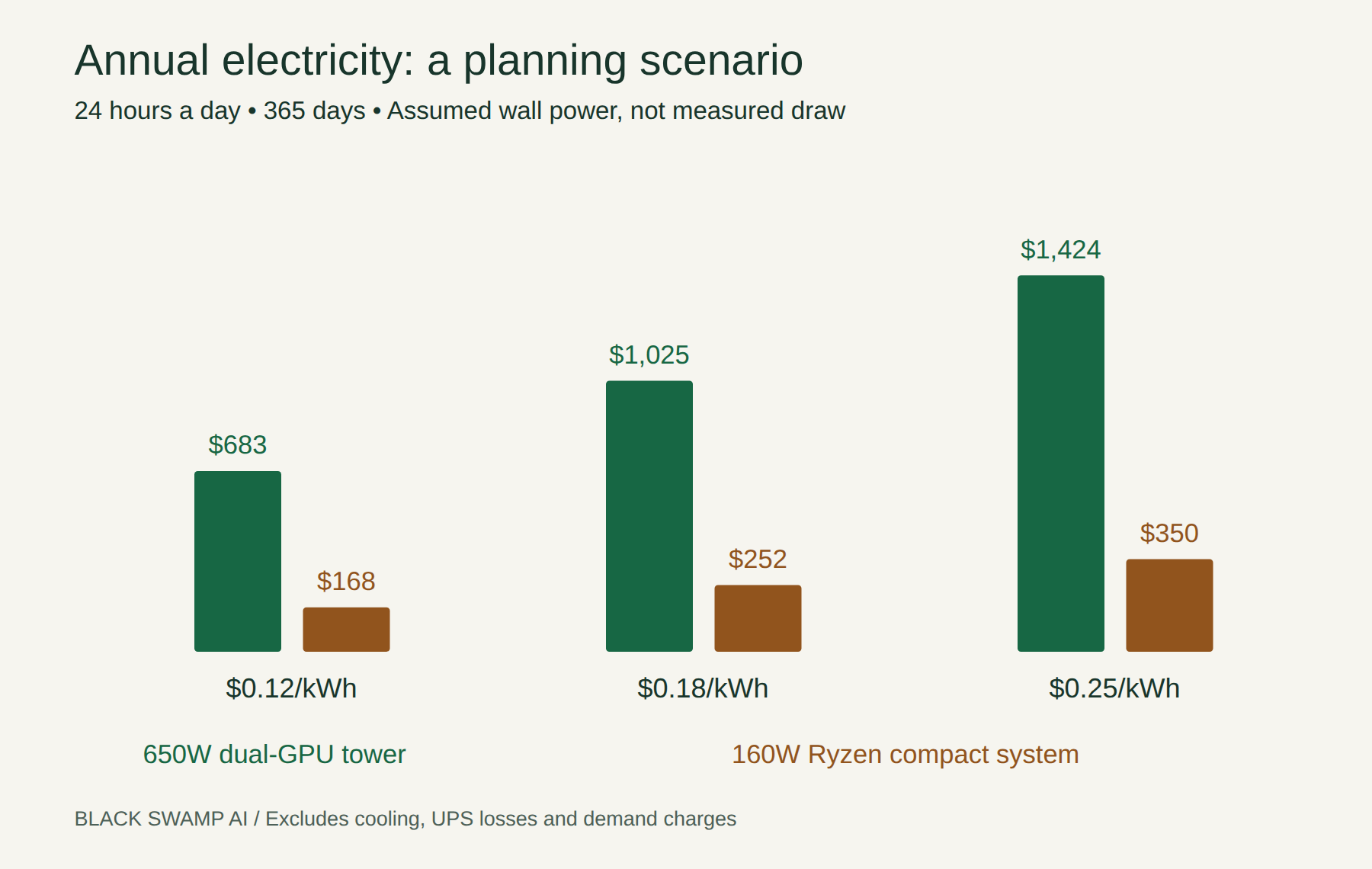
Your workload and electricity rate determine the real bill. A faster machine may finish a batch sooner, so we also consider energy per completed job. Cooling, backup power and where the heat goes matter when the server will run all day.
Maintenance and room to grow
The tower is easier to expand. GPUs, memory and storage can be replaced within the limits of the platform. It also has more fans and components to maintain. Adding a third or fourth GPU may require a different motherboard, enclosure and power supply.
The 395 is simpler physically. Storage is usually expandable, but CPU and memory upgrades generally mean replacing the mainboard or the system. Choosing enough memory at purchase is especially important.
Both need software updates, backups and someone responsible for keeping the service available. We can include deployment, monitoring and ongoing maintenance in the project, with the scope agreed up front. The supported AMD software stack varies between the two platforms.
For budgeting, three to five years is a useful planning window, not an expiry date. A system can keep doing valuable work longer if its models still meet your needs. The tower gives you more ways to extend that life through individual upgrades.
Buy now or wait?
Memory and storage prices have been volatile. Framework has documented repeated cost increases, and TrendForce’s September market update reports continued pressure on PC memory pricing.
Over the next three to six months, further increases, steadier prices and selective discounts are all plausible. There is no dependable date when these systems will become cheaper. Our approach is to price a complete build close to purchase, confirm availability, and compare the cost of waiting with the value of putting it to work.
Let’s choose the right system for your work
Choose a 128GB Ryzen AI Max+ 395 when you want a compact shared AI server with more room for large models and a smaller power bill. Choose a dual-R9700 tower when faster interactive responses, busy shared workloads, separate services and hardware expansion are higher priorities. We validate the chosen configuration against your model and expected load before recommending it.
Our local AI build and deployment service can cover either option, model setup and connections to your applications or n8n workflows. You do not need to arrive with a parts list. Tell us what you want AI to do, how many people or automations will use it, and what you want to spend.
Talk to us about your AI system
Specifications, prices and benchmark sources reviewed September 6, 2026. Model support and availability change; your quote and deployment plan will use the requirements agreed for your project.
Researched and edited with GPT-6 Astra. Reviewed by Chris at Black Swamp AI.
Have a project in mind?
We can help scope a local AI build or automation workflow.
Discuss it with Chris ↗